
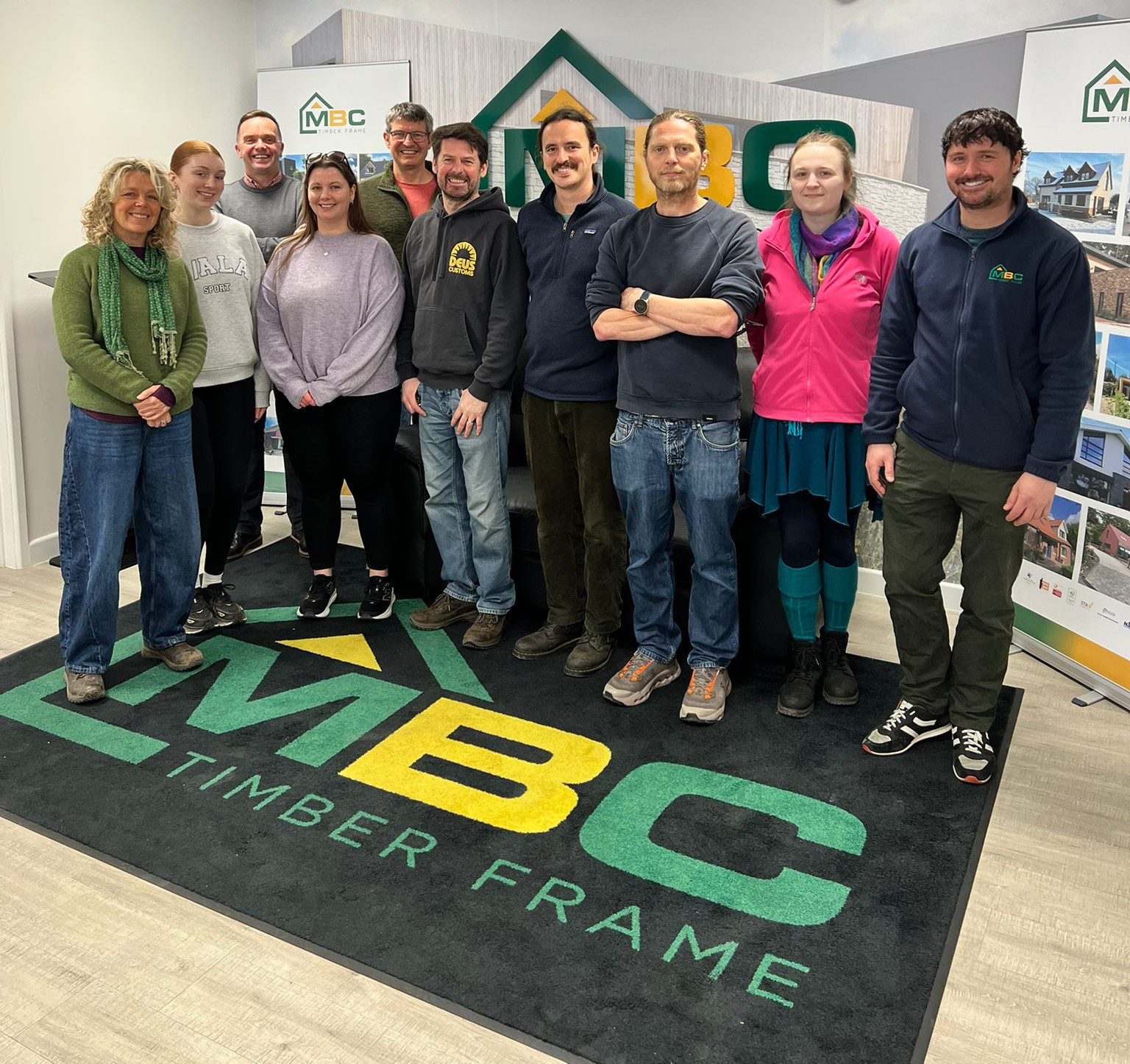
As regulations on the efficiency of new houses in the UK increase, knowledge and experience around building methods that can support these changes are becoming invaluable. As part of a company social, the SHIFT Environment team visited MBC Timber Frame to get an inside look at their fascinating design and manufacture processes. An outing that helps us to better understand and prepare for an energy efficient future and its environmental reporting needs. Here’s what they told us and showed us.
Who Are MBC Timber Frame?
Originally from Ireland, but now based in the historic city of Gloucester, MBC have 20 years of experience providing energy efficient timber frame homes. They offer a full service from foundations to window fitting, with an innovative approach to home building that involves assembling the timber-based structural components in a controlled factory environment. Within these factories they use mechanised systems that ensure precision measurement and cutting, allowing almost perfect joins, and ensuring the greatest possible airtightness in their structures.
Though many of these builds are currently bespoke homes (some of which have appeared on Grand Designs), their production process is versatile and has produced a variety of builds from student accommodation to a social housing project on Anglesey.
Their environmental interest extends to all aspects of the business, and they have an annual external audit which has verified a carbon neutral status for the last 3 years running.
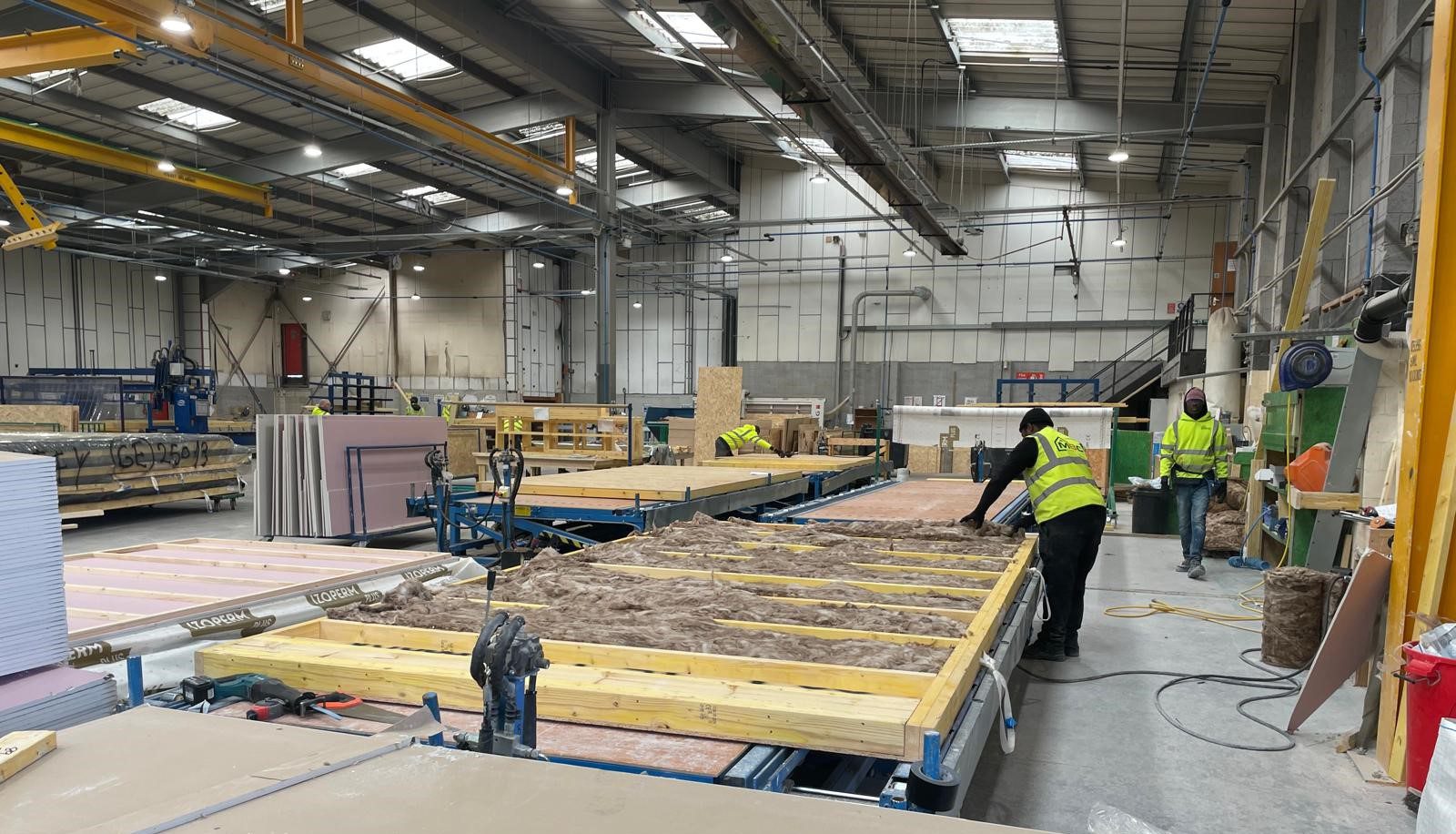 Wall panels being assembled in factory conditions.
What Do MBC Timber Frame Offer?
Prospective clients can choose between MBC’s High Performance and Passive House, with both systems infinitely adaptable to suit the clients’ design. Both house types are highly efficient, with component elements never exceeding a U-value of 0.14W/m2K and going as low as 0.10W/m2K. This can give a potential hourly air change rate of 0.6, made possible through integration of a mechanical ventilation and heat recovery (MVHR) system.
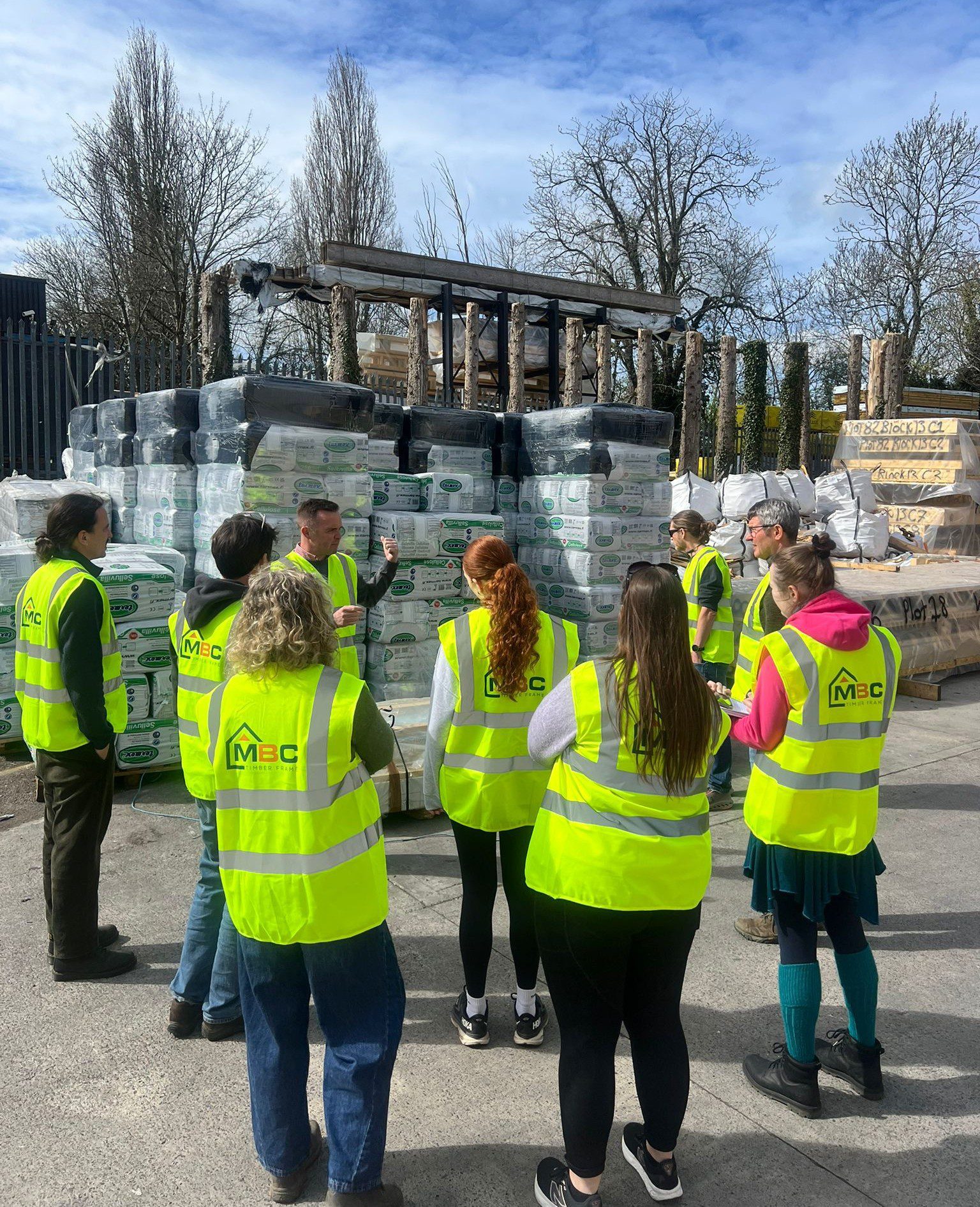 Onsite surrounded by wood and packages of cellulose
These values are owed to MBC Timber Frame’s commitment to careful design and precision manufacture: with most utilities penetrating through the foundation slab to minimise holes in the structure, and continuous insulation from floor to wall to roof for the Passive House design (minimising cold bridges). The main structural elements are preferably made from glulam (though steel is an option), a timber-based material with greater environmental and renewable credentials. These are combined with metal web joists to create a structure insulated with cellulose (a mixture of newspaper and woodchip).
Timber’s environmental advantage also relies on its sustainability, an aspect MBC Timber Frame are aware of, ensuring FSC accreditation for all their timber. Wood is sourced from Sweden, to ensure strength and structural integrity due to the slower growth such climes provide.
The Future of Housing
Though decarbonisation of UK energy is in motion, the Future Homes Standard state that by 2027 increased efficiency will be required from new homes. As techniques change to meet this, it is hopeful that we will start to see more instances of everyday residential housing exhibiting the structural features associated with Passive Houses.
Next steps
For more information on MBC Timber Frame visit their website: www.mbctimberframe.co.uk
Should you wish to gain data on the sustainability of new build homes beyond energy efficiency, please be in touch: [email protected]