Blog

New Guidance for the UK’s Space Ports and Launch Operators

New Guidance for the UK’s Space Ports and Launch Operators

This is the UK’s first resource of its kind, a [1] guidance for UK’s space ports and launch operators that intends to shape consistent, evidence-based environmental practice for the UK space sector. With a global projected economy of $1.1 trillion by 2045, the sector...

read more
The Evolution of the Greenhouse Gas (GHG) Management Hierarchy

The Evolution of the Greenhouse Gas (GHG) Management Hierarchy

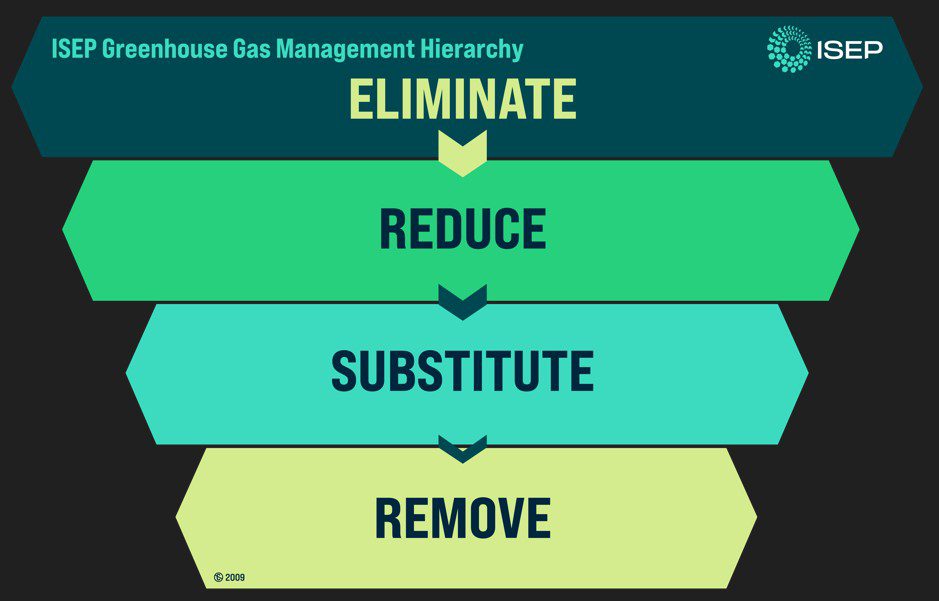
Since its introduction in 2009 by our professional governing body ISEP [1], the GHG management hierarchy has had to evolve with net-zero targets through the years, and its most recent update gives a structured framework for organisations to reduce their GHG emissions...

read more
Does AI have a Role in a Sustainable Future?

Does AI have a Role in a Sustainable Future?

AI is becoming prevalent in many work environments, with accompanying claims around the technology’s positive and negative impacts on the climate crisis. A recent article in Transform [1] (ISEP’s bimonthly publication) spoke with Golestan Sally Radwan, the Chief...

read more
The Current Status of Geoengineering

The Current Status of Geoengineering

Geoengineering has become a buzzword in some entrepreneur circles as an exciting and large-scale way to tackle climate change, however for many it remains a nebulous concept full of uncertainties. A recent article in the ISEP publication Transform [1] explored the...

read more
Energy Auditing of GP Surgeries

Energy Auditing of GP Surgeries

In recent months here at SHIFT, we have been conducting energy audit reports on GP surgeries in the Gloucestershire area. In total, 68 practices were visited and audited on their energy usage, and our trusted assessors identified energy saving opportunities at each...

read more
New guidance issued for Environmental Clerks of Works

New guidance issued for Environmental Clerks of Works

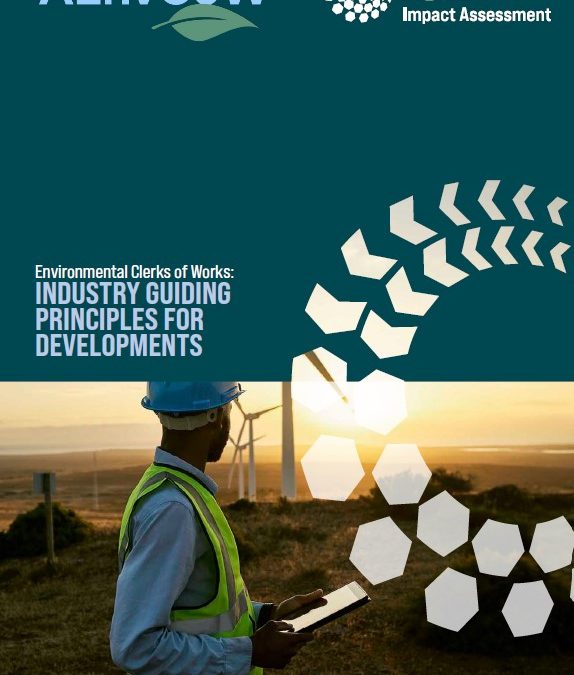
Our governing body, the Institute of Sustainability and Environmental Professionals (ISEP) has recently published the ‘Industry guiding principles for developments’ for environmental clerks of works (EnvCoW).  The document details 10 principles to help drive...

read more
Energy Efficiency in Passive Houses

Energy Efficiency in Passive Houses

As regulations on the efficiency of new houses in the UK increase, knowledge and experience around building methods that can support these changes are becoming invaluable. As part of a company social, the SHIFT Environment team visited MBC Timber Frame to get an...

read more
How SECR Links to Net Zero Goals

How SECR Links to Net Zero Goals

Turning Compliance into Opportunity For many UK organisations, Streamlined Energy and Carbon Reporting (SECR) is seen as just another annual compliance task—something to complete, submit, and move on from. But what if you could get far more value from it? In the true...

read more
Flood risk for English homes – a new data set

Flood risk for English homes – a new data set

The World Economic Forum’s Global Risk Report 2026 lists extreme weather events in the top 4 risks in both the short (2 years) and long term (10 years) [1].  So, it’s good to see that a new long term flood risk dataset for English homes is available from Defra. It...

read more
Update on Social-related Financial Disclosures

Update on Social-related Financial Disclosures

We have previously highlighted the work of The Taskforce on Inequality and Social-related Financial Disclosures (TISFD).  It is a similar initiative to TCFD but instead of climate related disclosures, it is oriented towards social related disclosures. In their most...

read more
ESOS PHASE 4 PLANNING: WHAT YOU SHOULD DO IN 2026

ESOS PHASE 4 PLANNING: WHAT YOU SHOULD DO IN 2026

ESOS phase 4 The official deadline for ESOS Phase 4 compliance is 5 December 2027 and we have covered what this means for 2026 in previous blogs. The blog covered late ESOS phase 3 submissions, action plans and progress updates. This blog is about specific updates for...

read more
SECR Metrics: Which KPI Should You Really Be Using?

SECR Metrics: Which KPI Should You Really Be Using?

Streamlined Energy and Carbon Reporting (SECR) has become the go-to framework for reporting energy use and carbon emissions in the UK. For many organisations, it’s an essential annual exercise — a structured way to calculate carbon footprints and demonstrate...

read more
SECR and Scope 3 Emissions: Meaningful Actions

SECR and Scope 3 Emissions: Meaningful Actions

Streamlined Energy and Carbon Reporting (SECR) provides organisations with a standardised framework for reporting carbon emissions. Scope 1 and Scope 2 emissions are now well understood by most businesses and, aside from a few grey areas, are generally straightforward...

read more
The real-world impact of SHIFT environmental reporting

The real-world impact of SHIFT environmental reporting

Why we exist At its core, SHIFT Environment exists for one reason: to drive real environmental improvements through meaningful environmental reporting. Reporting shouldn’t just be a box-ticking exercise. Whether we’re delivering environmental benchmarking, compliance...

read more
Regional CO2 emissions 2025

Regional CO2 emissions 2025

Another year and another set of regional CO2 emissions data has been released [1].  Splitting up UK data into regional emissions does seem to take DESNZ a bit of time and the data they are using is from 2023.  Nevertheless, it does allow for some analysis.  It is...

read more
A FREE Carbon Calculator for Property Maintenance Companies

A FREE Carbon Calculator for Property Maintenance Companies

Decarbonisation starts with one simple principle: you can only manage what you measure. Yet through our work on supply chain engagement, we consistently see the same challenge. Many property maintenance companies don’t currently have a clear understanding of their...

read more
Integrating SECR with Net Zero Planning

Integrating SECR with Net Zero Planning

Why SECR Is More Than a Reporting Requirement Streamlined Energy and Carbon Reporting (SECR) is best known as a standardised framework for reporting energy use and carbon emissions. For many organisations, it’s viewed as a compliance exercise—something to complete for...

read more