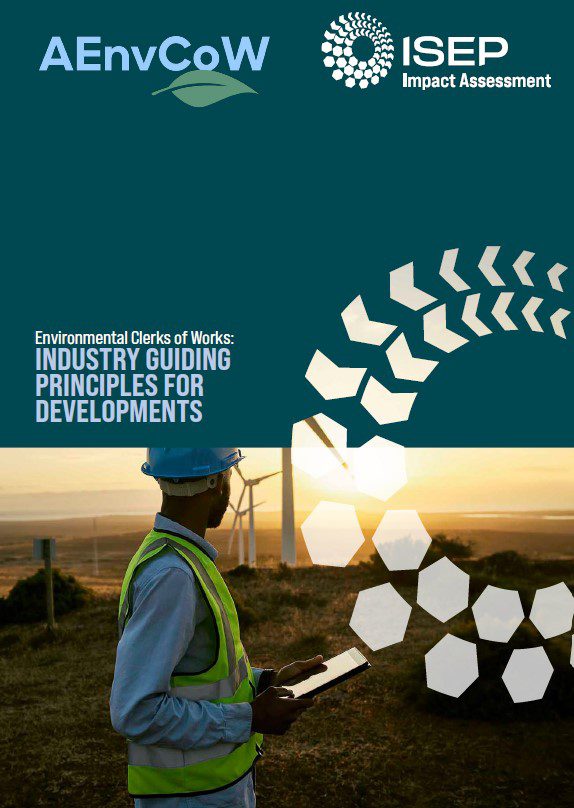
Our governing body, the Institute of Sustainability and Environmental Professionals (ISEP) has recently published the ‘Industry guiding principles for developments’ for environmental clerks of works (EnvCoW). The document details 10 principles to help drive compliance and improve environmental outcomes of development projects [1]. We are pleased to see that there is significant overlap with our Environmental Quality Management System (EQMS) for new build homes, that we released last year [2]. This blog explores the new guidance.
Why is this needed?
The guide identifies that “poor independent environmental/planning monitoring systems” contributes to a scenario that “dis-incentivises developers and contractors from delivering their environmental commitments’’. SHIFT Environment has previously highlighted how this can lead to less sustainable homes being built and higher running costs than original proposals would suggest [3].
ISEP expects these 10 principles will help create more sustainable and environmental projects by driving compliance that improves environmental outcomes during construction. And there is recognition that the principles need to be kept under review.
How would it work?
The first 2 principles define the role of an EnvCoW, and, importantly, define what is outside of the scope of the EnvCoW. Principles 3 to 5 cover how the project delivery teams should identify their environmental responsibilities, decide whether or not an EnvCoW is needed and how to appoint an independent EnvCoW.
The remaining principles outline compliance reporting, non-compliance reporting, inspection frequencies and responsibilities for enforcement.
The document stresses that the EnvCoW is responsible for independently reporting on compliance (or otherwise) with environmental outcomes. However, it is still the duty of the project delivery teams to actually deliver those outcomes.
With a structure in place, this will lead to better risk identification by inspecting during construction, highlighting what environmental and sustainability measures have been implemented during the process and reporting on the findings using a standardised framework customised to each project, ensuring accountability across the board.
Overlap with SHIFT Environment EQMS
In 2025 SHIFT Environment held a roundtable webinar on a proposed environmental quality management system (EQMS) for new build homes. We spoke with 24 staff from social landlords that represented over 350,000 homes to propose a similar system to that of ISEP.
At SHIFT we have heard direct reports of:
- EV chargers not working
- New builds with damp or mould
- Specifications not being delivered
Our 3-part system (on-site checks, off-site checks and first year defect data) has similar characteristics and goals as the EnvCoW principles. The goal will be to ensure each development achieves the environmental outcomes that makes homes which are truly sustainable. In addition, the EQMS will use data to drive reduction in embodied CO2 of building materials and defects.
Next steps
If you would like to discuss improving environmental outcomes in your building project, please feel free to contact us on [email protected].
[2] https://shiftenvironment.co.uk/news/an-environmental-quality-management-system-for-new-social-homes/
[3] https://shiftenvironment.co.uk/news/a-horror-story-poor-quality-in-new-builds/