The summer of 2026 has seen unprecedented heat, with a maximum recorded temperature of 38.2°C measured in early August at Hartpury College, Gloucestershire. June, July, and August were all characterised by heatwaves, a weather event defined as 3 or more consecutive days above 28°C (the threshold for Southern Britain). These conditions helped to make Summer 2026 one for the record books:
- The number of days in 2026 spent above 28°C has surpassed all previous summers on record.
- It is the first year to see every summer month contain at least one day above 35°
- Unsurprisingly, a record number of days above the 35°C benchmark has also been reached.
- 54 weather stations broke their daily maximum temperature record in 2026.
- A summer mean temperature of 16.5°C has been calculated, making this provisionally the warmest summer since records began in 1884.
Such weather is likely to become the norm in future decades, according to MET Office climate scientists, and it is imperative that our infrastructure is adapted to meet these scenarios. Social landlords will play a major role in this, helping to ensure that the UK’s homes are designed or retrofitted to avoid overheating. If tenants cannot effectively cool their homes, it will affect not only their comfort but their health as well. The World Health Organisation highlights how extreme heat can exacerbate underlying illnesses (e.g. diabetes and asthma), and that high temperatures will also lead to heat stress deaths and lost work capacity, particularly in outdoor workers.
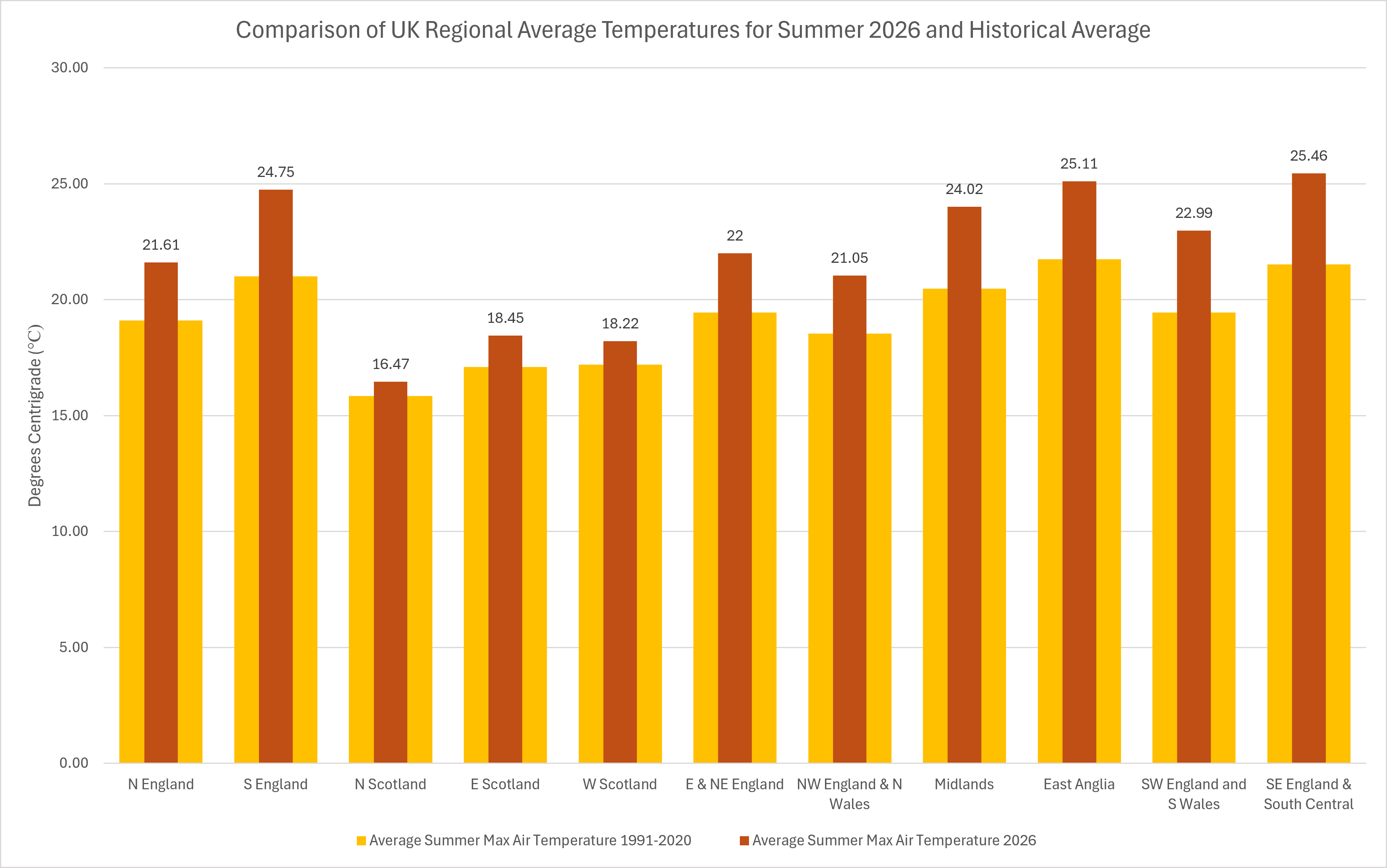
The MET Office collect weather data across all UK regions, and 2026’s summer average maximum temperature for these regions can be seen on the accompanying graph, plotted against the average maximum temperature for the period 1991-2020. All regions show an increase, though it is clear that English and Welsh regions saw the biggest difference. The South in general saw temperatures more than 3°C higher than average; 7 counties, including Oxfordshire and Surrey, recorded their highest ever average temperatures for August.
Interested individuals can explore how their local area fared during this record summer by using a BBC developed tool, based on MET Office data, that provides postcode level information on heat and drought experienced across the UK in 2026. This is a good general view of local climates; however, property level risk of overheating is based on a number of factors (including dwelling type and heating system) and requires further analysis to ensure meaningful results.
What Next?
For social landlords, SHIFT can provide a UPRN level assessment of overheating risk. This is based on asset data, and calculated using 6 unique factors:
- Dwelling type
- Heat Network presence
- Build Year
- Urban Heat Island effect
- Single Aspect presence
- Located in Hot Region or not (the associated graph shows how some UK regions are seeing much greater temperature increases than others)
This analysis highlights properties within a portfolio that are assessed as at risk of overheating, and thus most in need of refurbishment and/or action plans to prepare for heatwave events. Addressing this risk to UK housing stock will help to ensure that tenants remain cool, healthy, and able to contribute to society, despite our changing climate.
If you would like an overheating risk assessment for your property portfolio, please feel free to get in touch on [email protected]
[1] https://www.bbc.co.uk/weather/articles/c99dypl3jgmo
[2] https://www.metoffice.gov.uk/research/climate/maps-and-data/uk-and-regional-series
[3] https://www.metoffice.gov.uk/blog/2026/july-2026-weather-stats-a-regional-breakdown
[4] https://www.metoffice.gov.uk/blog/2026/how-exceptional-were-uk-summer-2026-daily-temperatures
[6] https://www.who.int/news-room/fact-sheets/detail/climate-change-heat-and-health