
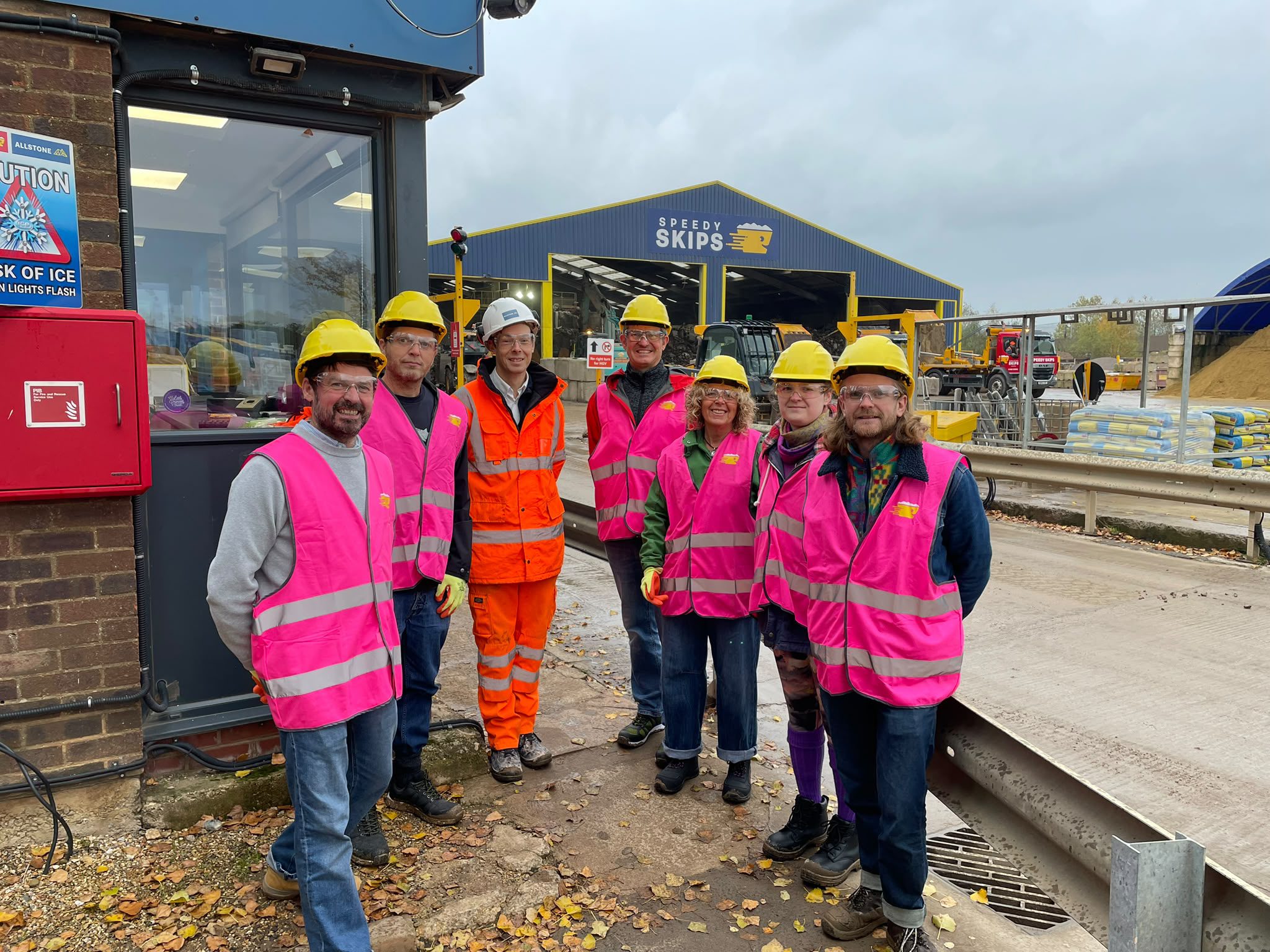
What happens to the contents of a skip once it leaves your driveway or building site? Our team had the chance to find out when Allstone welcomed us to their waste recycling plant in Gloucester as part of a team social. We came away with a much clearer picture of the work involved in sorting waste—and plenty to talk about.
Allstone supplies quality aggregates, Speedy Skips and waste management services across Gloucestershire. We are very grateful to the team for taking the time to show us around and share both the practical challenges and the opportunities they see ahead.
A second life starts with careful sorting
The process begins as skips are unloaded at the front of the processing building. Operators check the types of waste arriving, recording information for reporting and alerting colleagues to anything that could be difficult to process. They even have an unofficial helper: a local herring gull with a keen eye for food waste!


From there, a series of sieves, conveyors, air separators and magnetic separators sort the waste into different sizes and material streams. Allstone describes its role as being on the front line of waste sorting, and seeing the process in action brought that description to life.
The separated materials go on to a range of uses, including chipboard manufacture, metals processing and refuse-derived fuels. On rare occasions, a very small amount of waste still needs to go to landfill.
Small choices that make a difference
One important message from the visit was simple: please keep batteries out of skips. They increase the risk of fires, and dedicated battery collection points are the place to take them instead. It is a practical way for customers to help protect the people handling their waste.
Elsewhere on site, we saw how different waste streams are processed:
- Construction skips: Allstone has found that charging extra for contaminated skips encourages customers to separate waste more carefully on construction sites.
- Electrical cabling: A chipper and cyclone separator efficiently extract copper from waste cables.
- Aggregates: Alongside crushing waste concrete, Allstone recovers construction sand from excavated soils.
These examples gave us a real appreciation of the different processes needed to recover useful materials from mixed waste.
Local waste, local opportunities
The plant’s location close to Gloucester city centre gives Allstone a strong connection to the community it serves. It also means taking particular care to avoid disturbing neighbours.
There is a pleasing circularity to the operation: waste from the city can be recovered and put to use in new projects within the city. The location also keeps skip lorry journeys relatively short, making electric skip lorries a promising future option.
Looking ahead
Electric lorries are very much part of Allstone’s vision for the future. As well as reducing emissions, they would mean quieter vehicles for neighbours and no exhaust fumes from those vehicles for people working on site.
The team has also investigated rooftop solar panels. Infrastructure cabling is a barrier at present, but they hope that can be resolved so this opportunity can move forward.
Another driver for change connects closely with our own work: environmental, social and governance (ESG) reporting. Allstone’s commercial clients are increasingly asking about environmental credentials, adding momentum to its environmental efforts.
Thank you, Allstone
Our visit was a valuable opportunity to look beyond the skip and understand the care, equipment and practical problem-solving involved in recovering materials. It was also a chance to hear how Allstone is thinking about the next steps, from cleaner transport to renewable energy.
A big thank you to everyone at Allstone for welcoming us, sharing their knowledge and giving us such an engaging look behind the scenes. It made for a memorable team social and left us with a greater appreciation of the work happening on our doorstep.
Find out more about Allstone’s aggregates, skip hire and waste management services.